Lab811 operates a dedicated metal additive manufacturing laboratory and a graduate research office in the Engineering Building at Southern Illinois University. The laboratory covers the full path from digital design to printed metal specimen: build preparation, laser powder bed fusion, part removal, and finishing.
Metal additive manufacturing — Engineering Building E0040
E0040 houses the group's laser powder bed fusion (LPBF) capability and the equipment needed to recover, section, and finish printed parts. The room is access-controlled because of the metal powder handled there.
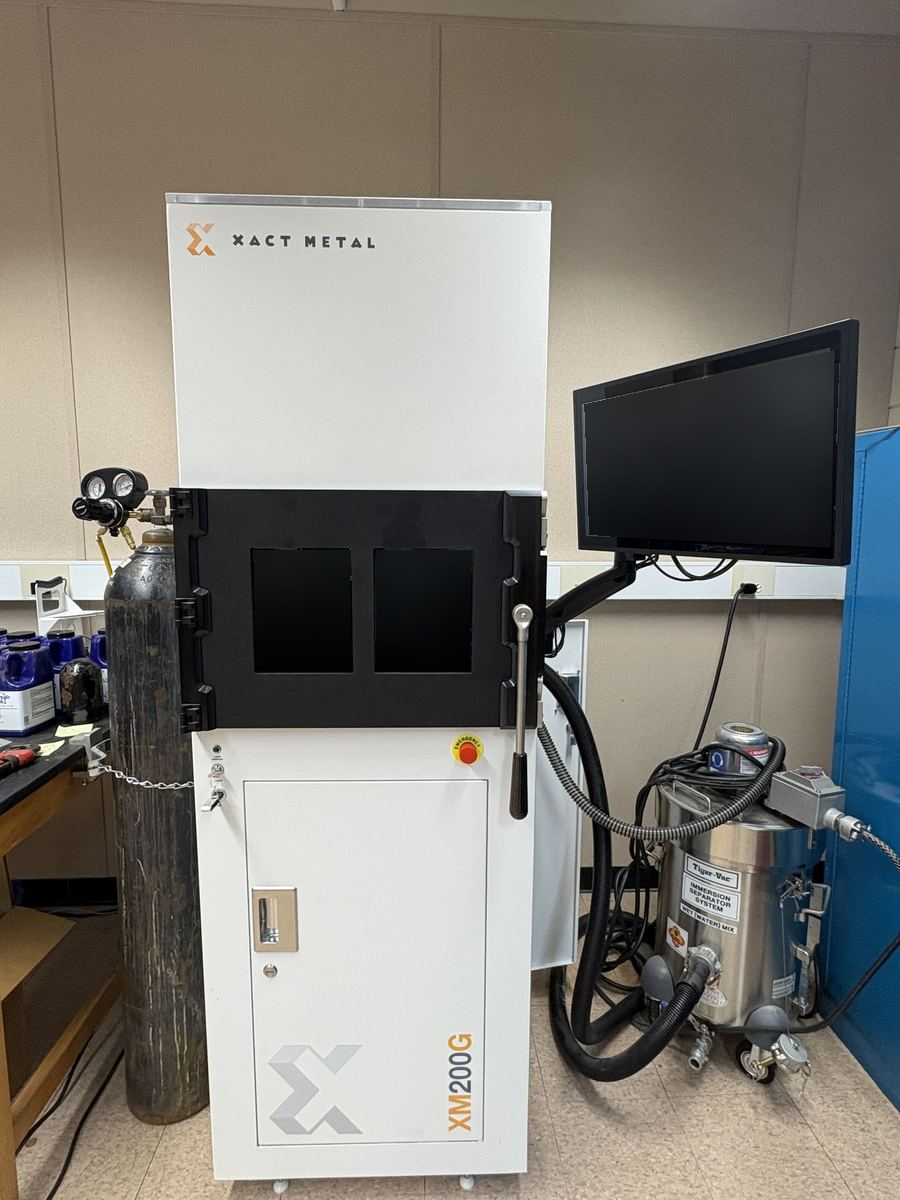
- Xact Metal XM200G laser powder bed fusion system. 100 W fiber laser, 150 × 150 × 150 mm build volume, nitrogen inert-gas supply with two-stage regulation. Used for lattice and architected-material specimens, process-parameter studies, and build-to-build repeatability work.
- Tiger-Vac immersion separator system. Wet-collection industrial vacuum dedicated to combustible metal powder recovery and machine cleanout.
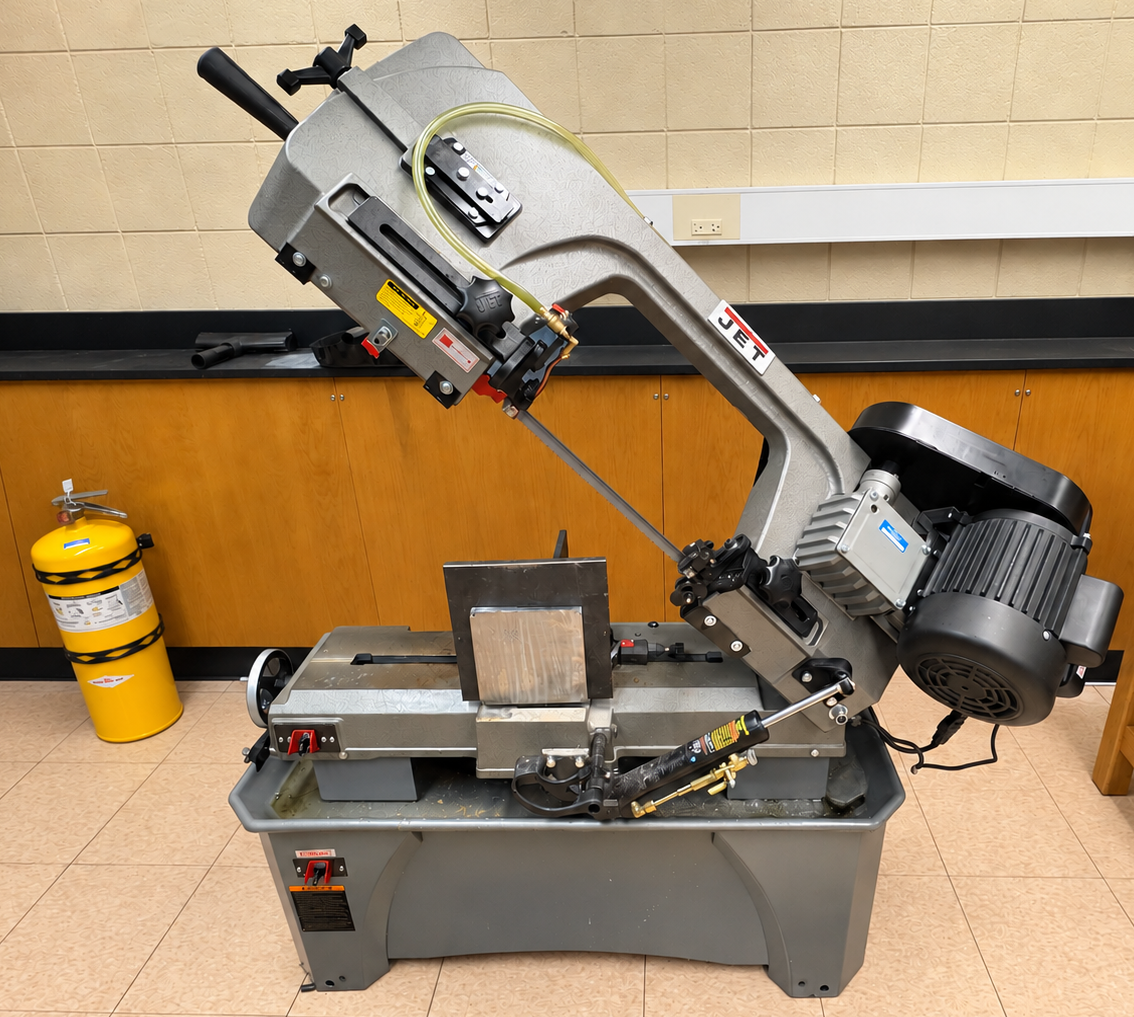
- JET horizontal metal-cutting band saw. Flood-coolant bed saw used to remove printed parts from the build plate and to section specimens for further analysis.
- Chemical fume hood (Hamilton SafeAire) and finishing bench. Benchtop belt sander and hand grinder for support removal and surface finishing.
- Flammable-materials storage cabinet, emergency eyewash, and fire extinguisher within the room.
- Build-preparation workstation with slicing and print-setup software adjacent to the machine.
Powder inventory
Feedstock is stored by alloy and labeled by reuse state: virgin, recycled, and residual, so that powder history can be reported alongside results from a given build.
- 316L stainless steel — Praxair TruForm 316-3, 5 kg jars.
- Iron-based alloy powder — Praxair FE-211-5 / 1234F, 10 lb jars.
- Aluminum bronze (Cu-104) — Linde CU-104-2, 5 lb jars. Supplied as a thermal-spray-grade powder and used for exploratory LPBF studies rather than as a qualified powder bed feedstock.
Specimen types
Printed and sectioned in E0040: triply periodic minimal surface (TPMS) gyroid, Schwarz, and IWP structures, and simple-cubic lattices, across a range of relative densities and unit-cell sizes.
Graduate research office — Engineering Building D0015
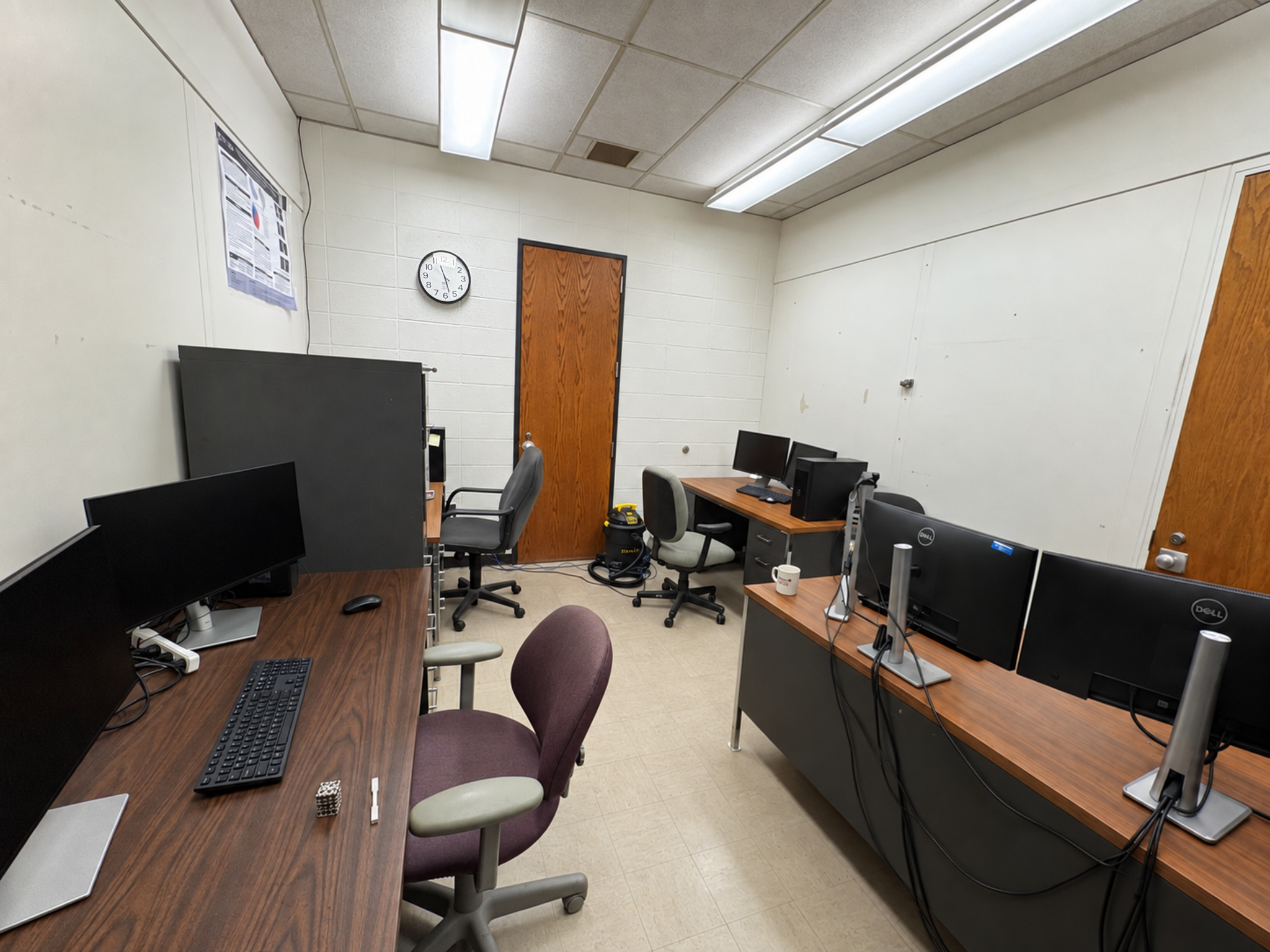
D0015 provides desk space and computing workstations for Lab811 graduate students, together with whiteboard and printer for the group.
Computing
- NSF National AI Research Resource allocation, award supporting machine learning for mechanics and materials.
- Local workstations in E0040 and D0015 for simulation, model development, and print preparation.
- HPC clusters from SIU
- Research software for finite-element analysis, scientific computing, and machine learning.